Calgary and Harvard, 1948–2013
Daniel Wegner
The feeling that you willed an action is not a direct view of the cause. It is an inference the mind makes when a thought comes just before an act and fits it. Usually the guess is right. Sometimes it is spectacularly wrong.
The view
Wegner was a social psychologist, best known before this work for showing that trying not to think of a white bear makes you think of it more. In The Illusion of Conscious Will (2002) he argued that the experience of willing an act, the feeling that "I did that", is produced by a separate system from the one that actually causes the act. The feeling is the mind's interpretation of its own behaviour.
According to his theory of apparent mental causation, we feel that a thought caused an action when three conditions hold. The thought came just before the act (priority); it matched the act (consistency); and no other cause was obviously at work (exclusivity). When the conditions hold, we feel we willed the act, whether or not the thought really caused it. When they fail, we may do things without feeling that we did them.
The argument
The experience of will is the way our minds portray their operations to us, not their actual operation. After Wegner, The Illusion of Conscious Will (2002)
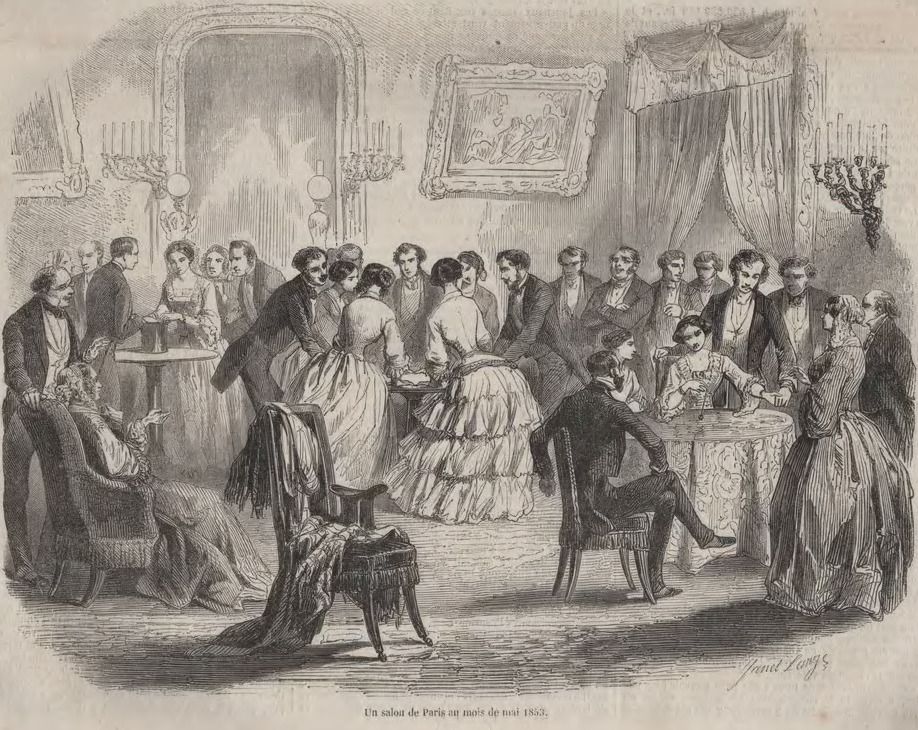
The evidence runs both ways. Table-turning, the Ouija board, dowsing and "facilitated communication" are cases where people move without feeling that they are moving. In the other direction, Wegner and Thalia Wheatley designed an experiment called I Spy, published in 1999. A participant and a hidden confederate shared a computer mouse, moving a cursor over pictures of small objects. Through headphones the participant heard words, and sometimes the confederate forced the cursor to stop on the object just named. Participants then rated how far they had intended the stop. Move the moment the word is heard, below.
People felt more strongly that they had intended the stop when the word came a second or a few seconds before it, and less when it came long before or just after, although they had not caused it at all. The pattern, rather than the exact numbers, is what the figure shows. The feeling of will followed the timing of the thought, not the true cause of the movement.
Where he meets Dennett
On the psychology, closely. Dennett had long argued that our introspective reports are a story the brain tells, a "user illusion" like the icons on a computer screen, and Wegner's experiments are a striking demonstration of exactly that for the sense of agency. Both reject the idea of a little inner self whose acts of will are directly visible to it.
Where they part
On the title. Wegner called conscious will an illusion. Dennett thought that was the wrong conclusion from the right evidence. That the feeling of willing is constructed does not show that our thoughts and deliberations have no effect on what we do; it shows only that we do not observe the effects directly. A computer's desktop is a user illusion too, yet dragging a file into a folder really moves it. Wegner himself called the experience of will the mind's compass: a guide that helps us keep track of what we are responsible for. Dennett would say that is most of what free will ever was.
| Wegner | Dennett | |
|---|---|---|
| Is everything fixed by prior causes? | Behaviour is caused by mechanisms we do not experience. | Perhaps. Freedom does not depend on the answer. |
| Is free will compatible with determinism? | The question is less important than how the experience of will is made. | Yes. Every kind of freedom worth wanting survives determinism. |
| Do we have free will? | Conscious will, as experienced, is an illusion, though a useful one. | Yes: an evolved capacity to act for reasons, which comes in degrees. |
| Does anyone deserve blame? | The feeling of will helps us track authorship and responsibility. | Yes, within a fair system of rules that free agents have reason to accept. |
Further reading
- Daniel M. Wegner, The Illusion of Conscious Will (MIT Press, 2002).
- Daniel M. Wegner and Thalia Wheatley, "Apparent mental causation: sources of the experience of will", American Psychologist 54 (1999).
- Dennett's "user illusion" is explained on the Dennett page of our sister site, Philosophy of Mind.