An illustrated guide

Could you have done otherwise?

Every choice you make seems to be up to you. Yet everything you are was shaped by causes you never chose: genes, upbringing, chance and the laws of physics. Daniel Dennett argued that this is no threat to the freedom that matters. Free will is real, it evolved, and it needs no miracles.

This site starts from Dennett, who spent fifty years arguing that the free will worth wanting is compatible with a fully scientific picture of the world. His books Elbow Room (1984) and Freedom Evolves (2003) are the backbone of the Dennett page, which sets out his case in twelve steps and six interactive figures, from a digger wasp caught in a loop to a glider in Conway's Game of Life.

From there, each major view gets its own page: what it claims, the argument that drives it, and where it meets and parts from Dennett. His allies come first, then a history that runs from Aristotle and the Stoics through Hobbes, Hume and Kant to William James. The scientists follow, from Benjamin Libet's half-second to Robert Sapolsky's Determined, and finally the philosophers who think Dennett was wrong, whether because free will needs an open future or because nobody has free will at all.

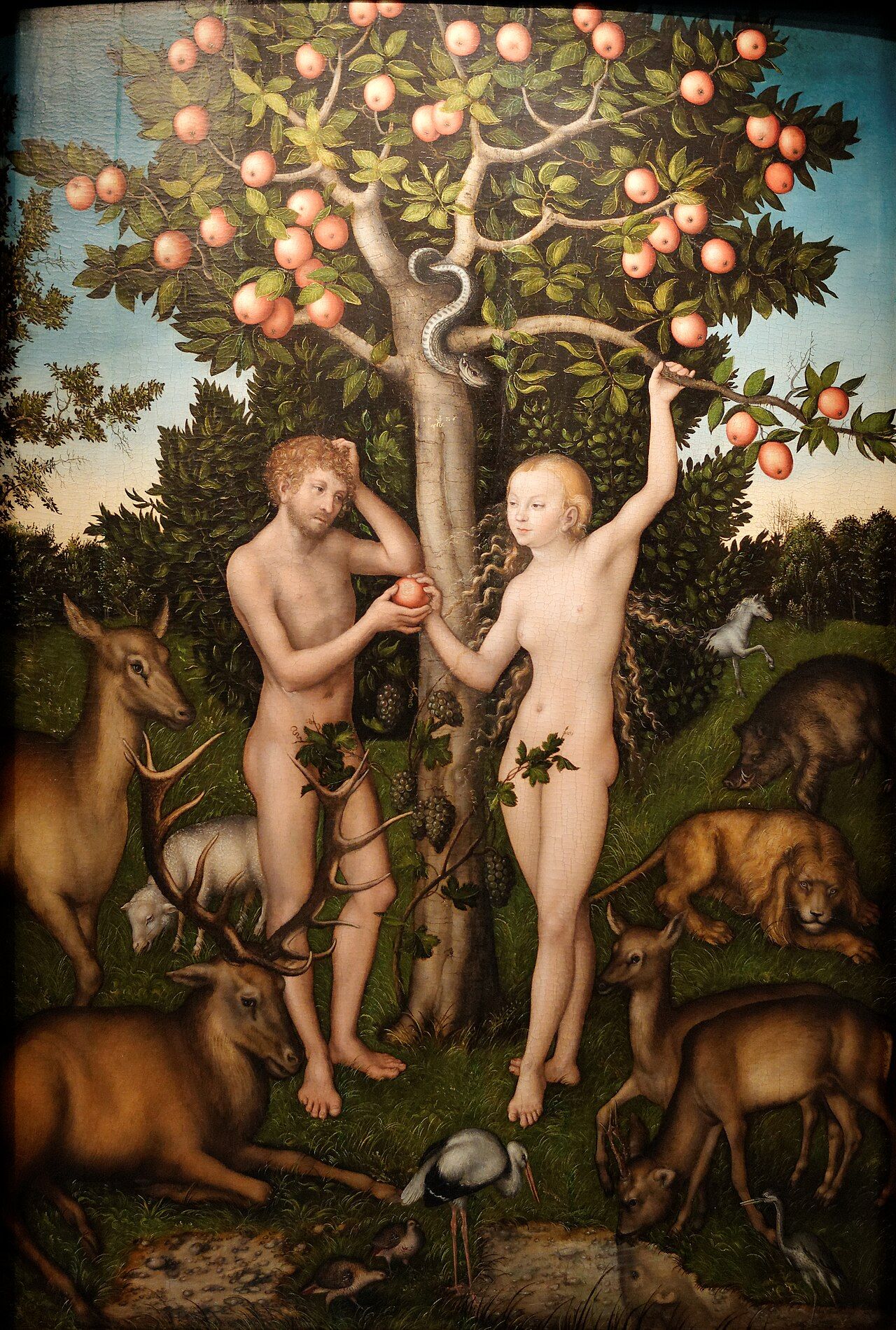
Adam and Eve stand naked beneath an apple tree heavy with fruit; Eve offers Adam an apple while he scratches his head, the serpent coils in the branches and animals gather around them
Lucas Cranach the Elder, Adam and Eve, 1526. Courtauld Gallery, London. The oldest story about a free choice, and about blame. Adam scratches his head, as if he has not quite decided.Public domain, via Wikimedia Commons.
Dennett's view Free will worth wanting: bugbears, the Game of Life, Austin's putt, Luther's stand and the evolution of freedom, in six interactive figures. The allies Harry Frankfurt's counterexamples, P. F. Strawson's reactive attitudes, John Martin Fischer's guidance control and Alfred Mele's look at the neuroscience. The long history Aristotle, Epicurus's swerve, the Stoics' dog and cart, Augustine, Hobbes, Spinoza, Hume, Kant, Laplace's demon, Schopenhauer and William James. The scientists Libet's half-second, Daniel Wegner's illusion of conscious will and Robert Sapolsky's case that there is no free will at all. The far side Robert Kane's self-forming actions, Peter van Inwagen's consequence argument, Galen Strawson, Derk Pereboom, Gregg Caruso and Sam Harris. Clouds, clocks and the multiverse Karl Popper looks for freedom between perfect determinism and pure chance; David Deutsch finds room for it in the multiverse. Do we deserve blame? Retribution, deterrence and the quarantine model. Seven views judge four hard cases, from a drunk driver to a man with a brain tumour. The lab Libet's clock, a machine that predicts your "random" choices, the Game of Life and every other experiment on the site. Where do you stand? Twelve statements about determinism, chance and blame. How close are you to Dennett, and which thinkers are nearest? Compare all views Every thinker in one table: is the world determined, is freedom compatible with it, do we have it, and does anyone deserve blame? Videos A planned narrated series in the style of the sister sites' films, one episode for each turn in the argument. Reading Books to explore next, with links for UK and US readers. Sister site: Philosophy of Mind Is consciousness a magic trick? Dennett's illusionism set against thirty views of the mind. Sister site: Philosophy of Time Does time flow? David Deutsch set against the Greeks and today's physicists, with ten narrated films.