About
About this site
An independent study site on free will, built around Daniel Dennett's books and the long argument they join. The third of a family, with Philosophy of Time and Philosophy of Mind.
What it is
The starting point is Dennett's view, set out in Elbow Room (1984), Freedom Evolves (2003) and his debate with Gregg Caruso, Just Deserts (2021): that the free will worth wanting is a real, evolved capacity, compatible with a world of causes. The Dennett page follows that case in twelve steps. Each major view of free will then gets a page of its own, setting out the view, the argument for it, and where it meets and parts from Dennett, from his closest allies through twenty-four centuries of history to the scientists and philosophers who reject his picture.
The site is the free will companion to Philosophy of Mind, which follows Dennett on consciousness, and Philosophy of Time, which follows David Deutsch on time. The three questions overlap: whether the future is open, whether there is a self that decides, and what a mind is.
Who made it
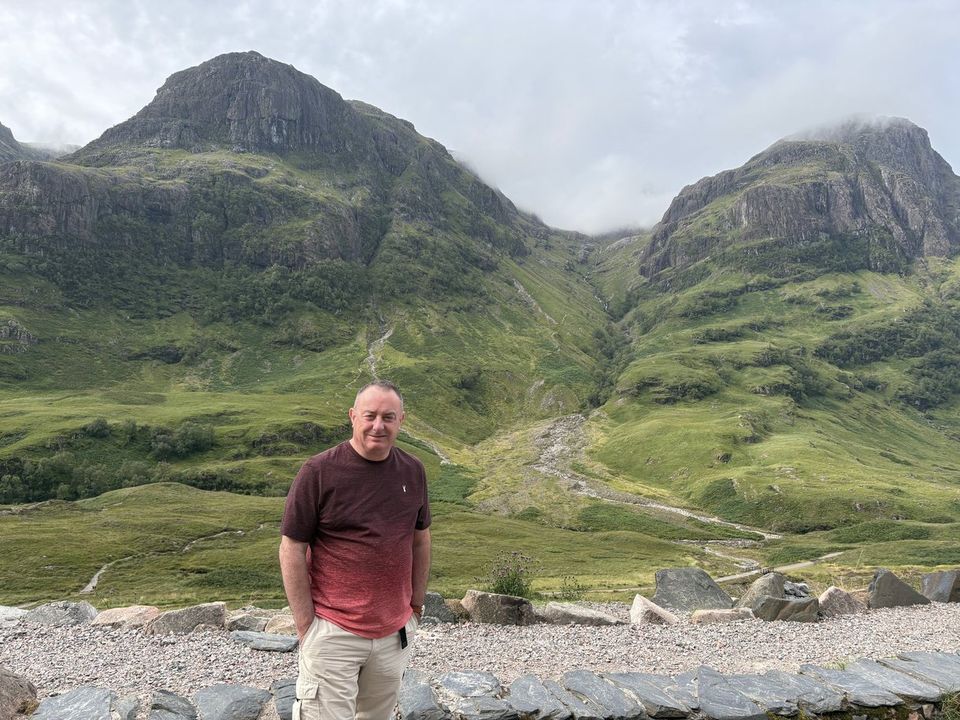
I'm Tim Stephenson. I made Philosophy of Time to work through David Deutsch's chapter on time, Philosophy of Mind to do the same for consciousness, and this site to follow Dennett on the question his work on the mind always led back to. The site starts from Dennett, but every view here is set out as strongly as I can manage. If you think I have got Dennett, or anyone else, wrong, I would like to know.
Sources and copyright
- Dennett's books and the works of other modern authors are in copyright. The site summarises them in its own words and quotes at most one short passage from any copyrighted source on a page.
- Where a modern author is set off in a quotation box, the words are our paraphrase, marked "after".
- Quotations from Aristotle, Lucretius, Seneca, Augustine, Spinoza, Kant, Laplace, Schopenhauer and Nietzsche are our own translations or paraphrases. Hobbes, Hume and William James are quoted from works in the public domain.
- Interactive figures are drawn in code for this site. Some, such as the I Spy chart, show the pattern of published results rather than the data, and say so.
- Book links on the reading page are plain links, not affiliate links.
Images
The images are public-domain artworks, prints and photographs from Wikimedia Commons, resized to 1280 pixels wide or less. The full list, with a link to each file's Commons page, is below and in art/CREDITS.md.
| Work | Collection | Source | Used on |
|---|---|---|---|
| Lucas Cranach the Elder, Adam and Eve, 1526 | Courtauld Gallery, London | Commons | Home |
| Sofonisba Anguissola, The Chess Game, 1555 | National Museum, Poznań | Commons | Dennett, Videos |
| Rembrandt, Philosopher in Meditation, 1632 | Musée du Louvre | Commons | Thinkers, Compare |
| William Hogarth, Gin Lane, 1751 | Commons | Frankfurt | |
| Rembrandt, The Return of the Prodigal Son, c. 1661–69 | Hermitage Museum, St Petersburg | Commons | P. F. Strawson, Videos |
| Winslow Homer, Breezing Up (A Fair Wind), 1873–76 | National Gallery of Art, Washington | Commons | Fischer, Videos |
| Herbert James Draper, Ulysses and the Sirens, 1909 | Ferens Art Gallery, Hull | Commons | Mele |
| Charles Laplante, Aristotle and His Pupil Alexander, 1866 | Commons | Aristotle | |
| Lucretius, De rerum natura, ninth-century manuscript | Leiden University Library, VLF 30 | Commons | Epicurus and Lucretius |
| Peter Paul Rubens, The Death of Seneca, c. 1612–13 | Alte Pinakothek, Munich | Commons | The Stoics, Videos |
| Philippe de Champaigne, Saint Augustine, c. 1645–50 | Los Angeles County Museum of Art | Commons | Augustine |
| Abraham Bosse, frontispiece to Hobbes's Leviathan, 1651 | British Library (CC0 scan) | Commons | Hobbes, Videos |
| Anonymous, Baruch Spinoza, c. 1665 | Herzog August Bibliothek, Wolfenbüttel | Commons | Spinoza |
| Allan Ramsay, David Hume, 1754 | Scottish National Portrait Gallery | Commons | Hume |
| Emil Doerstling, Kant and His Table Companions, 1892–93 | Commons | Kant | |
| Jean-Baptiste Paulin Guérin, Pierre-Simon Laplace, 1838 | Château de Versailles | Commons | Laplace, Videos |
| Ludwig Sigismund Ruhl, Arthur Schopenhauer, 1815 | Commons | Schopenhauer, Videos | |
| Photograph of William James, early 1900s | Commons | William James | |
| Paul Cézanne, The Black Marble Clock, c. 1869–71 | Private collection | Commons | Libet, Videos |
| "Tables tournantes", L'Illustration, 14 May 1853 | Commons | Wegner | |
| Rembrandt, The Anatomy Lesson of Dr Nicolaes Tulp, 1632 | Mauritshuis, The Hague | Commons | Sapolsky, Videos |
| Annibale Carracci, The Choice of Hercules, 1596 | Museo di Capodimonte, Naples | Commons | Kane |
| Francisco de Goya, Atropos (The Fates), c. 1820–23 | Museo del Prado, Madrid | Commons | Van Inwagen |
| Baron Münchhausen pulls himself out of the swamp, print | Zentralbibliothek Solothurn | Commons | Galen Strawson, Videos |
| Francisco de Goya, The Straw Manikin, 1791–92 | Museo del Prado, Madrid | Commons | Pereboom |
| Vincent van Gogh, Prisoners Exercising, 1890 | Pushkin Museum, Moscow | Commons | Caruso |
| Odilon Redon, Closed Eyes, 1890 | Musée d'Orsay, Paris | Commons | Harris |
| John Constable, Cloud Study, 1821 | Commons | Popper | |
| Viktor Vasnetsov, Knight at the Crossroads, 1882 | Commons | Deutsch | |
| Pompeo Batoni, Hercules at the Crossroads, 1742 | Commons | Quiz | |
| Johannes Vermeer, The Astronomer, c. 1668 | Musée du Louvre | Commons | Lab |
| Giotto, Justice, c. 1305 | Scrovegni Chapel, Padua | Commons | Do we deserve blame? |
| Carl Spitzweg, The Bookworm, c. 1850 | Commons | Glossary, Reading |


