Vienna and London, 1902–1994
Karl Popper
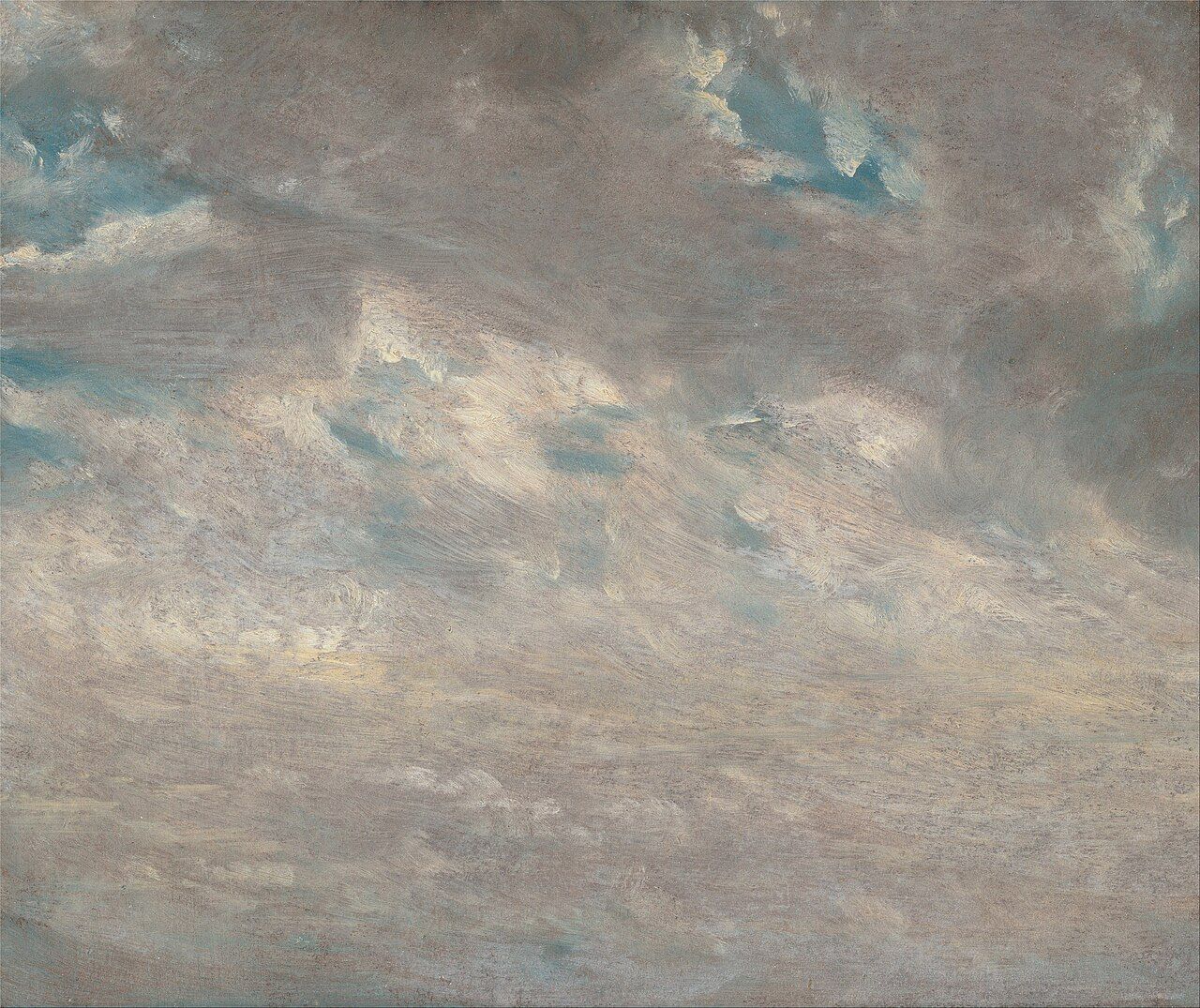
Physics once said that all clouds are really clocks: everything precise, everything determined. Then quantum theory said that all clocks are really clouds. Neither picture leaves room for a mind that is guided, flexibly, by its own ideas. Freedom lives in between.
The view
Popper is best known for his philosophy of science: theories can never be proved, only tested and, if they fail, refuted. In 1965 he gave the Arthur Holly Compton Memorial Lecture in St Louis, published as "Of Clouds and Clocks" and reprinted in Objective Knowledge (1972). It is his most famous statement on free will, and on how the human mind fits into the physical world.
Popper was an indeterminist. He argued in The Open Universe (1982) that even classical physics does not imply determinism, and that the future is genuinely open. But he insisted that indeterminism is not enough for freedom. If our actions were the product of chance, like the clicks of a Geiger counter, they would be no more free than if they were the ticks of a clock.
The argument
What we need is something intermediate between perfect chance and perfect determinism: a control that is plastic, not cast-iron. After Popper, "Of Clouds and Clocks" (1965)
Popper's example of plastic control was a soap bubble. The air inside and the film around it control each other: the film holds the air in, the air holds the film out, neither rigidly. Mind, he argued, is a control system of this kind, and its most important controllers are abstract things: theories, aims, arguments and values, which he called the contents of World 3. A mathematician's hand is moved, in the end, by a proof. Drag the dial below from clocks to clouds.
With the neuroscientist John Eccles, Popper later wrote The Self and Its Brain (1977), defending a form of interaction between mind and brain. That was further than most of his admirers would go. But the core idea of the Compton lecture, that ideas can steer bodies through systems of feedback and error-correction, has outlived the dualism.
Where he meets Dennett
On the importance of control. Popper's plastic control, a system steered by feedback and by its own representations of the world, is close to Dennett's picture of the free agent as a sophisticated control system. Both see evolution as a process of trial and error that built ever better controllers, and both think human freedom grew with language, criticism and culture. Dennett often praised Popper's evolutionary picture of knowledge, and coined the term "Popperian creatures" for animals that test hypotheses in their heads before trying them in the world.
Where they part
On indeterminism, and on the mind. Popper insisted that freedom needs an open universe, even if openness alone is not enough. Dennett thought plastic control works just as well in a deterministic world: a thermostat, a heat-seeking missile and a chess program all steer by feedback without any chance at all. And Popper's later interactionism, with a mind somehow acting on the brain, was exactly what Dennett spent his career arguing against. For Dennett, World 3 is real, but it acts through brains that represent it, not on them from outside.
| Popper | Dennett | |
|---|---|---|
| Is everything fixed by prior causes? | No. The universe is open, even in classical physics. | Perhaps. Freedom does not depend on the answer. |
| Is free will compatible with determinism? | No, though chance alone is not freedom either. | Yes. Every kind of freedom worth wanting survives determinism. |
| Do we have free will? | Yes, through plastic control by ideas. | Yes: an evolved capacity to act for reasons, which comes in degrees. |
| Does anyone deserve blame? | Yes; we are responsible for our actions and our theories. | Yes, within a fair system of rules that free agents have reason to accept. |
Further reading
- Karl Popper, "Of Clouds and Clocks", in Objective Knowledge: An Evolutionary Approach (Oxford, 1972).
- Karl Popper, The Open Universe: An Argument for Indeterminism (Hutchinson, 1982).
- Popper on the mind is discussed on the Popper page of our sister site, Philosophy of Mind.